
Solar Storage Battery Systems in NH, From the Team That Started It All Right Here

New Hampshire has some of the highest electricity rates in the country, roughly 24% above the national average per kWh according to EnergySage, and that shows up on every bill, not just during outages. A solar battery backup system works both angles: it stores solar power to offset what the home pulls from the grid year-round, and it keeps the essentials running when the grid drops.

What Sets SRsolarNH Apart in New Hampshire

400+ Installs Statewide

With more than 400 solar systems installed across New England, and battery backup layered into many of them, SRsolarNH has built a body of work that shapes every new design. What gets recommended for a home today comes from what has already been installed, tested, and stood up to real New England weather.

EnergySage Installer of the Year

Recognized as EnergySage’s Installer of the Year in both 2025 and 2026, an award that means more than most because it comes straight from customer reviews. The homeowners who worked with SRsolarNH shared their experience, and that’s what earned the recognition two years running.

Off-Grid Roots, Not a Side Service

Off-grid builds, battery banks, generator integration, and raised pole mounts are the kind of work most solar companies pass on, and they happen to be some of the most involved projects SRsolarNH takes on. Homeowners with remote properties or complicated setups tend to end up here for that reason, because the experience is already in the room when the conversation starts.

25-Year Workmanship Warranty

Every system is designed from scratch for the home it’s going on, with a Master Electrician on the project and a trusted network of local partners bringing the install together. Once it’s up, the work is backed by a 25-year workmanship and labor warranty, which says a lot about how the company builds and how long it plans to stand behind the job.

Union Leader Readers' Choice Award

Voted in by New Hampshire readers in both 2024 and 2025, two years in a row from the people who actually live with the work. It’s the kind of recognition that reflects real experiences with real installs, not an industry vote from people who never picked up the phone.

Battery Systems Built Around New Hampshire Homes

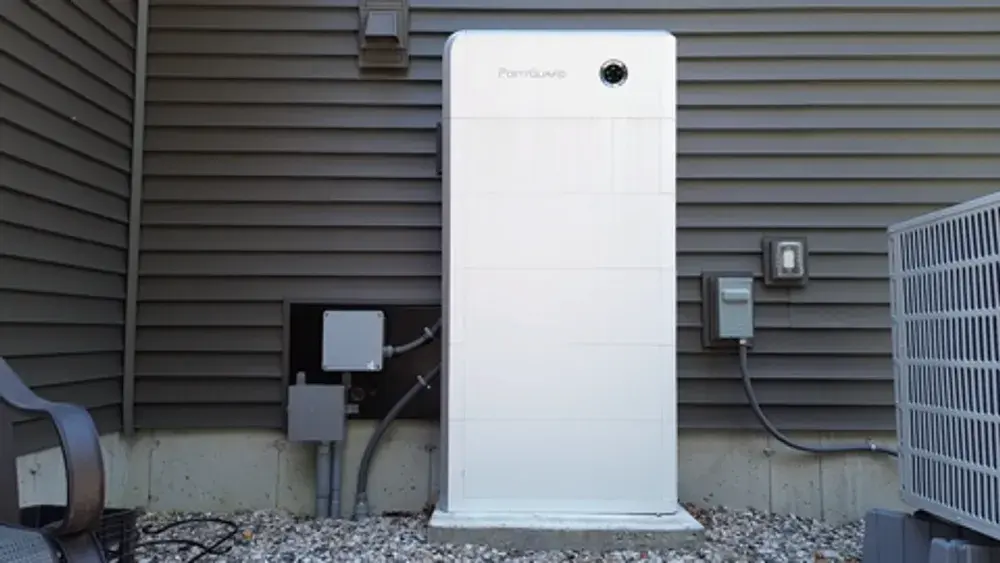
A solar battery backup system is what turns a solar array into something that can keep working when the grid does not. The panels generate power during the day, the battery holds onto whatever the home isn’t using in the moment, and that stored energy stays available for later, whether that means overnight, during a cloudy stretch, or in the middle of a multi-day outage. Without a battery, a standard grid-tied solar system shuts off the second the power goes out, no matter how much sun there is. With one, the home stays running on what the panels already made.

Tesla Powerwall

One of the most widely installed home batteries in the country, and for good reason. The Powerwall handles whole-home or critical-load backup depending on how the home is sized, integrates cleanly with a new or existing solar array, and has enough of a track record now that most homeowners already know what they’re getting.

SigEnergy Systems

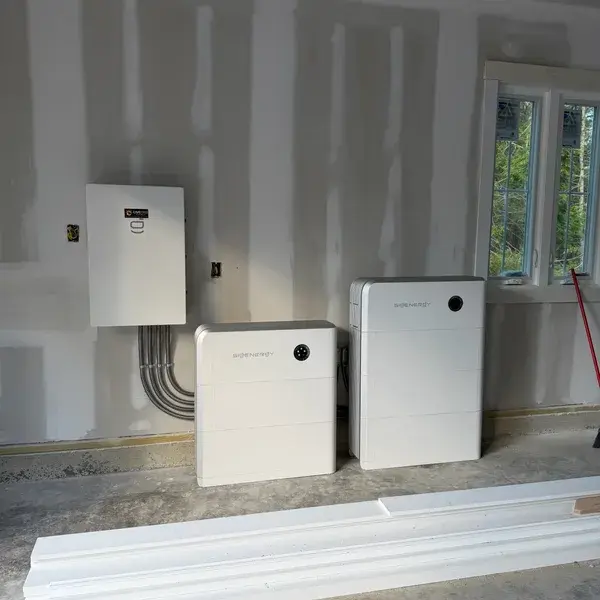
Built for homes that need more storage than a single unit can offer. SigEnergy scales up in modular blocks, which makes it a strong fit for larger properties, higher-demand households, or systems that combine solar, storage, and EV charging under one setup.

Franklin Whole Home Battery

Designed with whole-home backup in mind from the start. Franklin’s units carry a high storage capacity per unit and pair well when a home wants meaningful runtime without stacking a full row of smaller batteries against the wall.

Enphase

The natural choice for a home already running Enphase microinverters, because everything talks to the same system out of the box. Enphase batteries are modular, so the storage side can grow later without redesigning the whole array.

EG4 Batteries

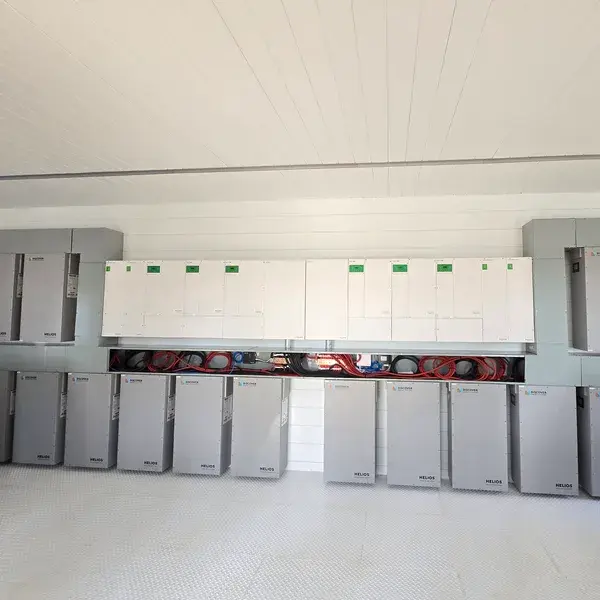
A workhorse in the off-grid and hybrid world. EG4 gives homeowners solid performance and useful capacity at a price point that makes larger battery banks realistic, which is why it shows up so often on the more ambitious off-grid builds.

Discover

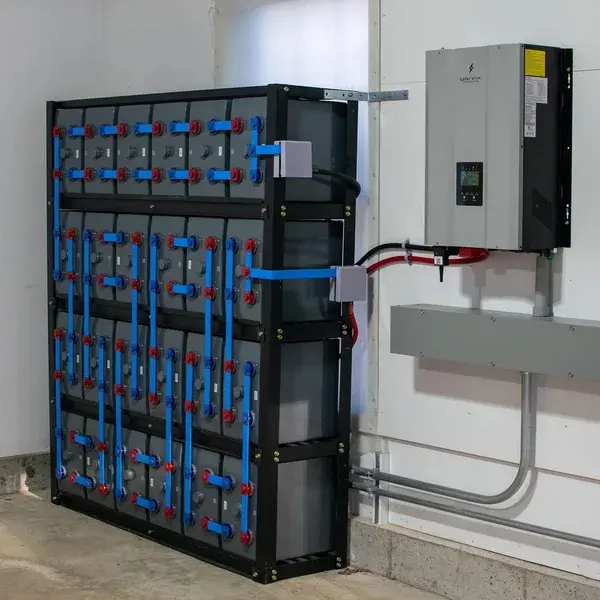
Deep-cycle chemistry that holds up to heavy use over long stretches, the kind of demand that off-grid systems and serious backup setups actually put on a battery. Discover has been a fixture in that space for years.

Franklin Whole Home Battery

Designed with whole-home backup in mind from the start. Franklin’s units carry a high storage capacity per unit and pair well when a home wants meaningful runtime without stacking a full row of smaller batteries against the wall.
How it Works

What Happens Inside a New Hampshire Battery System

1

Sunlight Becomes Stored Power

During the day, the solar panels generate more power than the home needs at any given moment. Instead of sending that extra energy back to the grid right away, the system routes it into the battery. That way there’s a reserve building up all day for whenever the home needs it later.
2

Your Battery Covers the Gaps

Once the sun drops or production slows down, the home starts pulling from the battery automatically before it touches the grid. That means less energy bought at night, less pull during peak hours, and more of what the panels already made getting used exactly where it should.
3

Outages Trigger an Instant Switch

When the grid goes down, the system switches over to battery power in milliseconds. Nothing to flip, nothing to plug in. As long as the sun is out during the day, the panels keep topping the battery back up, which is how a properly sized system carries a New Hampshire home through the kind of multi-day outages that come with a real winter storm.
Not Sure How Much Battery Backup Your NH Home Needs?

See Our Work

Why Choose Us

What Homeowners Are Saying

What Can You Power With a Solar Battery Backup?

What a solar battery backup actually powers during an outage depends on how the system is sized and which loads get flagged as critical when it’s designed. Not every appliance is worth backing up, and in New Hampshire the priorities look a little different than they do in other parts of the country. When SRsolarNH scopes a system for a NH home, these are the ones that come up most often.

Well Pump

High priority. Most homes outside the bigger towns are on a well, and no power means no water: no showers, no toilets, no water for animals.

Refrigerator and Freezer

High priority. A multi-day outage can cost a full freezer of food. Keeping the fridge running is one of the highest-value uses of a battery.

Heating System Controls

High priority. Furnaces, boilers, and heat pumps all need electricity to run their fans, pumps, and thermostats, even when the fuel side is fine. A cold snap without power gets serious fast in a New Hampshire winter.

Medical Equipment

High priority. CPAP, oxygen, medication refrigeration, mobility equipment. Anything a household depends on for daily care has to stay running.

Lights and Outlets

Medium priority. A few essential lights and outlets go a long way when the goal is just to keep the home habitable through an outage.

Wi-Fi and Phone Charging

Medium priority. Small draw on the battery, big return when the outage stretches into a second or third day.

Serving New Hampshire From the Seacoast to the North Country

SRsolarNH installs solar battery backup systems for homeowners across Massachusetts, with the strongest reach on the North Shore, the Merrimack Valley, and the Greater Boston area. If a town isn’t listed here, it’s still worth a call.

SalemAmesburySalisburyHaverhillNewburyportRowleyIpswichEssexGloucesterRockportBeverlyDanversMarbleheadLynnRevereMaldenSomervilleWalthamLexingtonWoburnBurlingtonConcordBillericaTewksburyLowellAndoverLawrenceMethuenActon

And the surrounding areas. Not sure if your property is in the service area? Give SRsolarNH a call to check.

Do you not see your town? Give us a call at 603-540-4243 to confirm we serve your area.

Frequently Asked Questions

The right spot depends on the home’s layout, the battery model, and local fire code. In most New Hampshire homes it ends up in the garage, the basement, or on a sheltered exterior wall. SRsolarNH walks through the options during the free consultation and handles all the permitting.
Once the battery is full, extra solar production flows back to the grid instead of going unused. In New Hampshire, that overproduction earns net metering credits from the utility, which offset what the home pulls from the grid at other times.
Usually, yes. Whether SRsolarNH did the original install or another company did, adding battery storage to an existing solar array is a common upgrade. The current inverter, electrical panel, and array wiring get reviewed first to figure out the right integration path.
It depends on how much storage the home needs and how involved the integration is. A single-battery critical-load setup is a different project than a whole-home system with multiple units. SRsolarNH puts together a free, no-pressure quote based on the specific home, and financing is available.
No. A standard grid-tied system is required to shut off automatically the moment the grid goes down, as a safety measure for utility crews on the lines. Without a battery, the panels can’t power the home during an outage, no matter how sunny it is.

New Hampshire Homes Deserve a System Built for NH Winters

Every SRsolarNH battery backup system is designed around the specific home it’s going on, from how the property uses power to what needs to stay on during a NH winter outage. Add in EnergySage Installer of the Year in 2025 and 2026 and the Union Leader Readers’ Choice Award in 2024 and 2025, and it’s a clear picture of what to expect. When the home is ready, SRsolarNH is one call away.