Solar in New Hampshire isn’t what it was a year or two ago, especially when it comes to financing and incentives. Electricity in the US keeps getting more expensive, and New Hampshire is no exception, with rates well above the national average.
Going solar means a real investment upfront, but once the system is in, your bill drops instead of climbing like everyone else’s. New Hampshire electricity rates already run about 24% above the national average, and they rise another 4% or so every year, according to EnergySage.
✅ Worth it if: you pay your own electric bill, your roof gets decent sun exposure, and you plan to stay in your home for several more years.
❌ May not be worth it if: your electric bill is already low, or you’re planning to sell within the next year or so. Heavy roof shade isn’t a dealbreaker either, a pole mount can put the system elsewhere on the property.
What Determines How Much Solar Costs in New Hampshire?
Solar costs depend on a few things, starting with how much electricity your home uses and how big a system it takes to cover that.
Why New Hampshire homeowners look into solar
New Hampshire ranks 7th highest nationally for electricity prices, per the U.S. Energy Information Administration. That works out to an average household bill of about $250 a month, one that swings with usage and season, making it hard to plan for.
A system you own produces fixed, predictable energy instead of a bill that keeps rising and changing with the utility. That’s part of why so many people in New Hampshire make the switch.
What affects your system’s price
Your final cost depends on your roof’s size and condition, the type of system you choose, and which incentives you qualify for. SRsolarNH looks at your actual utility bill and energy use to size the system, not a generic calculator or a flat rate.
How Much Will You Save With Solar Over Time? (ROI)
EnergySage data shows homeowners who go solar in New Hampshire save an average of $59,461 over 25 years, plus avoid close to $99,000 in electricity costs at today’s rates. How much you actually keep depends on your incentives and how fast the system pays for itself.
SRsolarNH’s financing options can shorten that payback period, so more of the savings land in your pocket instead of going toward a loan.
What Solar Incentives and Tax Exemptions Exist in New Hampshire?
New Hampshire doesn’t offer many state-level solar incentives, but two are worth knowing before you get a quote.
No state sales tax
New Hampshire has no general sales tax, and that includes solar equipment and installation labor. You skip a cost that homeowners in many other states pay on top of their system price.
Property tax exemption (RSA 72:62)
Under RSA 72:62, cities and towns in New Hampshire can exempt the added value of a solar system from your property tax assessment. It’s not automatic and not statewide, each town decides on its own. SRsolarNH can check if your town participates during your free quote.
How Does Net Metering Work in New Hampshire?
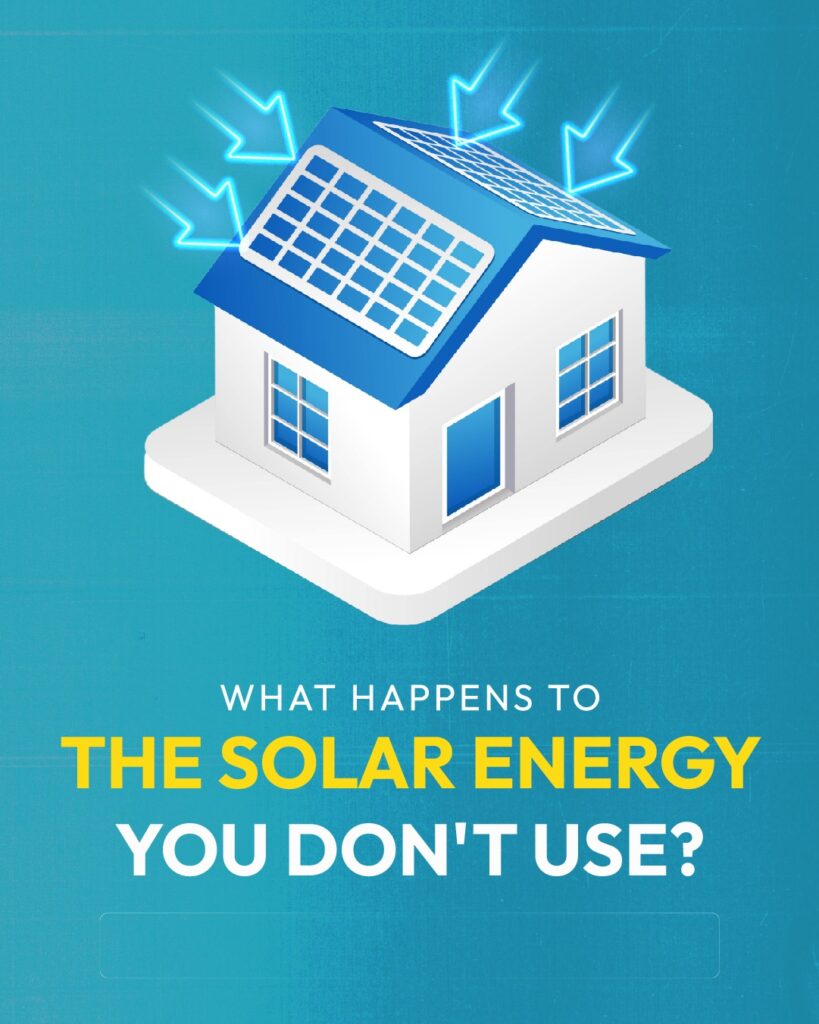
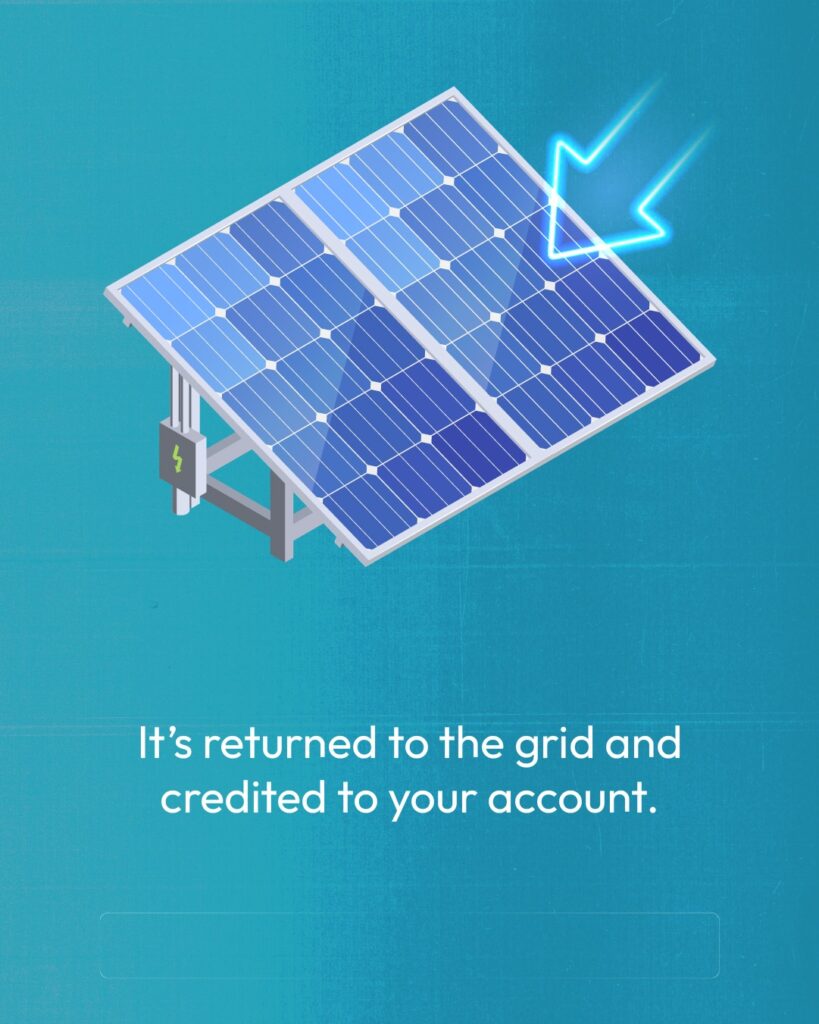
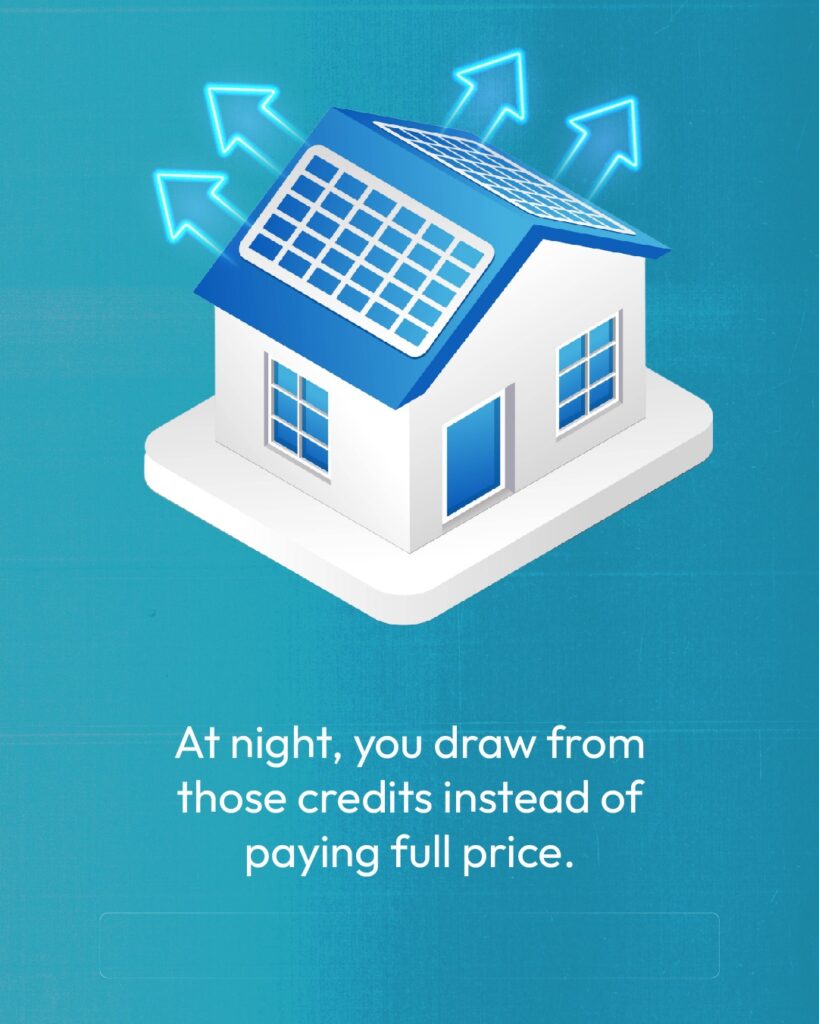
Net metering sends the solar energy you don’t use back to the grid and credits it to your bill. During the day, your panels usually make more than you need, so the extra builds up credit. At night, when they’re not producing, you draw on that credit instead of paying full price.
How much credit you get depends on your utility, and the terms can change over time. SRsolarNH can confirm the current terms for your utility during your free quote.
Net metering only works for grid-tied systems. Off-grid setups store extra energy in batteries instead, covered next.
Is Your Home a Good Candidate for Solar?
Two things about your property decide how well solar performs: your roof, and how New Hampshire’s weather treats it.
Roof orientation and shading
South-facing roofs with little shade produce the most energy, but east- and west-facing roofs still work well with today’s panels. The bigger factor is shade: even partial shade on one panel can drag down output for the whole string, and shade shifts with the seasons as trees leaf out. SRsolarNH checks orientation, pitch, and shading year-round during every free quote.
How New Hampshire winters affect solar production
Snow and shorter days do slow production some in December and January, but spring through fall makes up for it. Cold temperatures actually help panel efficiency, it’s heat, not cold, that cuts into solar output. The bigger winter concern is outages, which is why off-grid and battery-backed systems, a specialty of SRsolarNH’s, are built around New Hampshire’s seasonal swings.
Should You Add Battery Storage?
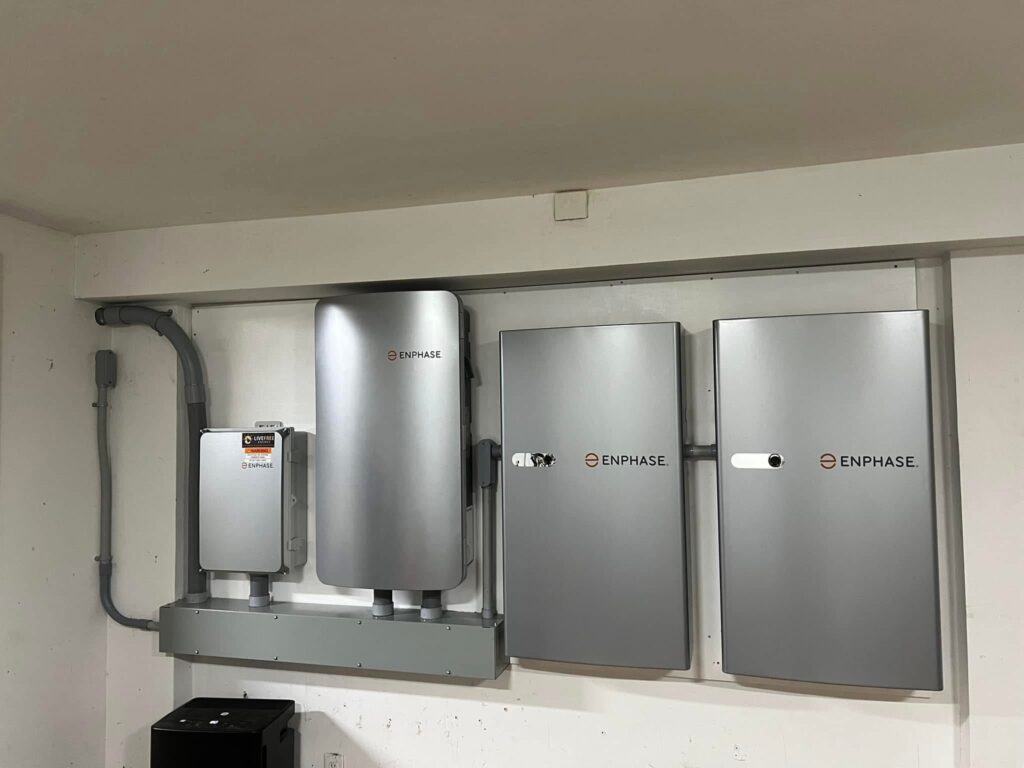
Battery storage isn’t for everyone, it depends on what losing power would cost you. New Hampshire winters bring a real risk of outages from ice and snow storms, and for a lot of households, keeping the lights, heat, and well pump running through one is worth it.
This is some of SRsolarNH’s most specialized work: batteries, generators, and full off-grid systems, including raised pole mounts for properties where a standard roof mount won’t work.
Who Should and Shouldn’t Go Solar in New Hampshire?
A few more details about your property can tip the decision.
Good fit for solar:
- Homes with high electricity use, like electric heat, a pool, or an EV, since there’s more to offset and the payoff comes faster.
- Rural properties, camps, and homes where the utility service isn’t fully reliable, since this is exactly the kind of battery and generator work SRsolarNH specializes in.
- New construction, since SRsolarNH can design the system in before or during the build, with the roof and wiring planned around solar from the start.
Might make sense to wait:
- Anyone planning a roof replacement soon. Better to handle that first so the panels go on a roof that won’t need touching again.
Choosing a Solar Installer: Why SRsolarNH Qualifies
When comparing solar installers in New Hampshire, look at how long they’ve been around, if they subcontract the work or keep it in-house, and what warranty backs the labor.
SRsolarNH is a family-owned, locally run business, not a big corporation. Josh and Adrianne run it directly, which means closer relationships and more personalized service.
A few things that back that up:
- More than five years in business, with 15+ years of combined installation experience across NH, ME, and MA
- Master Electrician on every project
- 25-year workmanship warranty
- Full permitting and utility paperwork handled
- Five-star reviews on Google
- EnergySage Installer of the Year 2025 and 2026, and Union Leader Readers’ Choice Award, 2024 and 2025
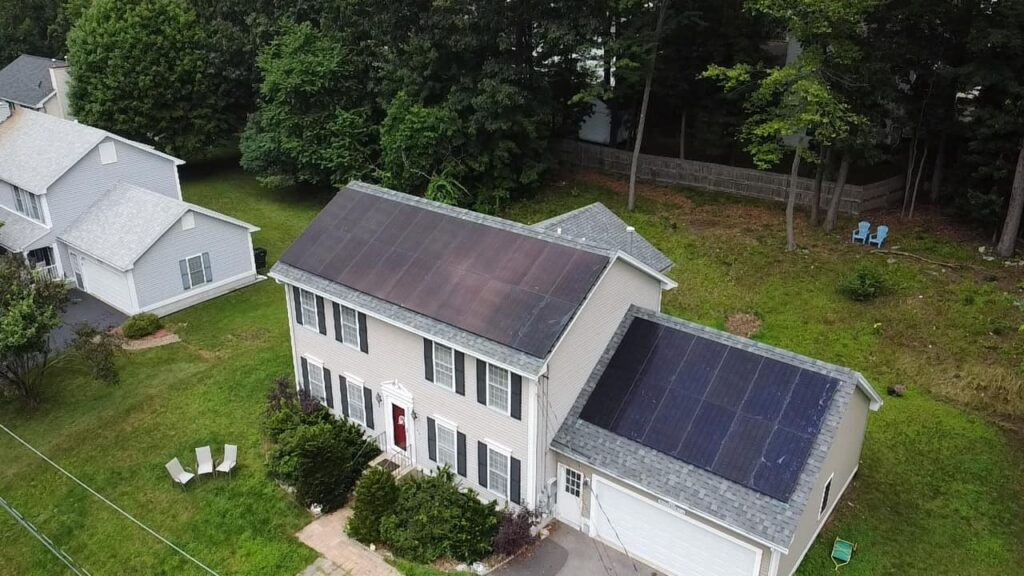
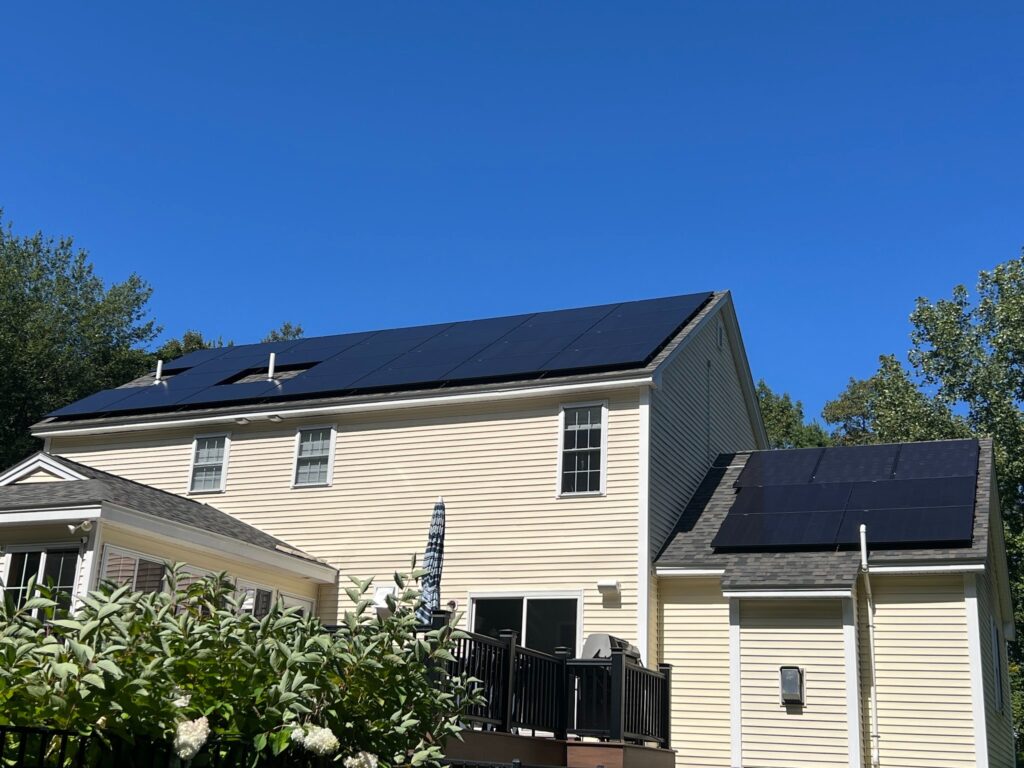
You can see real installations, including drone photography, in the SRsolarNH gallery, or reach out directly to talk through your own home.
Frequently Asked Questions
What if my roof needs repairs before I can go solar?
Roof condition, shading, and orientation are all evaluated during your free quote. If repairs are needed, just let us know then, and we’ll point you in the right direction.
How long does a solar installation take in New Hampshire?
It really depends on the project, things like system size, if it’s grid-tied or off-grid, and how permits move in your town. Contact us and we’ll walk you through what to expect for your home.
Can a house run 100% on solar?
Yes. Off-grid systems that pair battery storage with a backup generator give a home complete energy independence, generating, storing, and managing its own power with no utility connection. It’s common on rural properties and with homeowners after that kind of energy freedom.